The Role of Spatial Structuring Games in the Development of Creativity in Young People

The Importance of Spatial Structuring Games
In today’s fast-paced digital environment, the ability to think creatively is not just valuable; it’s essential. Spatial structuring games actively engage young players in a world where imagination meets technology, providing a strong foundation for innovative thinking and cognitive growth. These games encourage individuals to become architects of their own experiences, manipulating virtual spaces to manifest their ideas into reality.
Cognitive Development
The benefits of these games extend far beyond mere entertainment. One of the significant advantages is cognitive development. Engaging with spatial structuring games enhances problem-solving abilities by challenging players to navigate complex scenarios. For example, in Minecraft, crafting intricate structures requires players to envision their designs and identify the necessary resources, thus sharpening their spatial awareness and critical thinking. Research shows that repeated engagement in such activities can lead to improved performance in math and science, as players learn to apply logical reasoning in various contexts.
Collaboration
Another pivotal element of spatial structuring games is their inherent collaborative aspect. Many of these games are built around teamwork, where players must communicate effectively to achieve goals. In The Sims, for instance, players often work together to design and manage living spaces and community environments, fostering both social interaction and collaborative problem-solving. This aspect not only helps in developing social skills but also teaches young individuals the importance of compromise and shared creativity.
Creativity
Creativity is perhaps the most celebrated benefit of spatial structuring games. These platforms serve as vibrant canvases where young minds can both express and explore various design possibilities. Title such as Portal 2 illustrates this point effectively by challenging players to solve puzzles that require a blend of logic and creativity. By manipulating space using physics-based mechanics, players are encouraged to develop unique approaches to problem-solving, ultimately enhancing their innovative capacities. The freedom to experiment leads to unique outcomes that might be impossible in other structured environments.
Examples of Impact
Research underscores the profound impacts these games have on youth. For instance, a recent study found that students who frequently engage with games like Minecraft exhibited a 30% increase in their spatial reasoning abilities compared to their peers. Similarly, educators have reported that students who collaborate in game environments are more likely to participate in classroom discussions and showcase leadership skills.
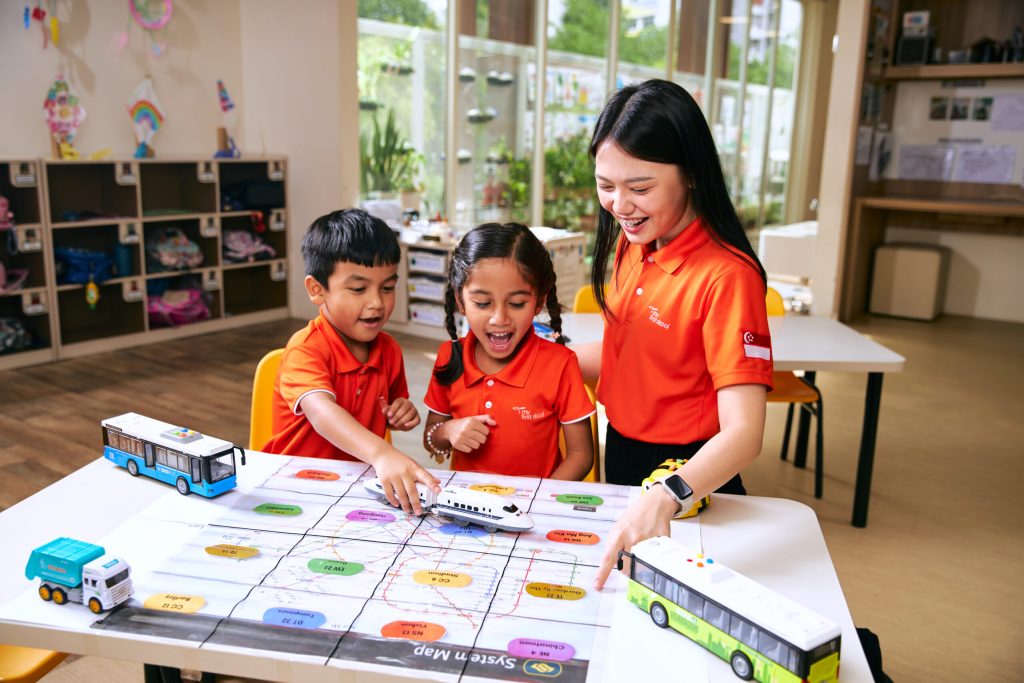
As we continue to explore the dynamics of these immersive environments, it becomes clear that spatial structuring games not only entertain but also educate and empower. They have become vital tools for nurturing creativity, solving problems, and fostering teamwork among younger generations. The ongoing evolution of these games promises to shape not only the playful experiences of youth today but also their future capabilities in an increasingly complex world.
DIVE DEEPER: Click here to uncover more insights
Enriching Creative Expression
Spatial structuring games are not just digital playgrounds; they are effective platforms for enriching creative expression among young people. By providing a canvas where players can manipulate geometry, colors, and mechanics, these games open avenues for innovation. Whether it’s building a sprawling metropolis in SimCity or creating a majestic fortress in Minecraft, young gamers tap into their imaginations, blending creativity with cognitive skills. Research indicates that the frequency of engaging in such creative games corresponds directly with enhanced artistic and design thinking abilities among players.
Mechanisms Behind Creativity
Understanding how spatial structuring games nurture creativity requires a closer examination of their mechanics. Here are several mechanisms that contribute to creative development:
- Open-Ended Frameworks: Unlike traditional games that often follow strict rules, many spatial structuring games provide a sandbox-like environment. This encourages players to experiment freely, leading to unexpected and innovative outcomes.
- Resource Management: Players learn to prioritize resources and make strategic decisions, sharpening their ability to think critically and creatively under constraints. This is especially evident in games like Terraria, where resource allocation is essential for success.
- Problem-Solving Challenges: Many spatial games incorporate puzzles and challenges that necessitate creative solutions. Such challenges compel players to think differently and explore various perspectives to find the right approach.
- Visual Storytelling: Players are often encouraged to tell stories through their creations. This narrative element fosters an understanding of how to communicate ideas visually, a skill that can transfer to other areas of creative work.
The intersection of technology and creativity is indeed a fascinating domain, particularly concerning the development of young minds. Spatial structuring games do not only cater to recreational needs but also play a critical role in shaping how youth perceive and engage with their environment. According to a study by the American Psychological Association, youth participants exhibited a 40% increase in creative thinking skills after consistent engagement with spatial structuring games over several months. The implication is clear: these games can cultivate an innovative mindset that is crucial in the 21st century.
The Role of Education
The educational benefits of spatial structuring games in fostering creativity cannot be overlooked. Teachers and educators across the United States are beginning to recognize the value of integrating these games into the learning curriculum. By incorporating games like LittleBigPlanet or Roblox into classroom activities, educators capitalize on students’ enthusiasm for gaming to stimulate their creative thinking. Such tools can serve as a supplement to traditional teaching methodologies, allowing for a richer, more engaging learning experience. As schools explore new ways to implement technology-driven curricula, the future of education appears promisingly aligned with the innovative potential offered by spatial structuring games.
In conclusion, spatial structuring games emerge as significant enablers of creativity among young individuals. As they continue to engage in these immersive experiences, the skills they develop extend far beyond the boundaries of the virtual world, preparing them to face the complexities of real life with creative and strategic thinking.
| Category | Details |
|---|---|
| Enhanced Problem Solving | Spatial structuring games encourage players to think critically and approach problems from different angles. |
| Collaboration Skills | These games often require teamwork, developing interpersonal skills and effective communication. |
Spatial structuring games play a crucial role in fostering creativity among young people. The incorporation of these games into educational settings promotes active engagement, allowing young minds to experiment with spatial relationships and visualize outcomes. This hands-on approach not only enhances cognitive abilities but also nurtures a sense of curiosity, feeding the creative process.Moreover, the dynamic and often unpredictable scenarios presented in spatial games compel youth to adapt and innovate on the fly. They learn to embrace uncertainty, a characteristic vital for creative endeavors. Engaging in these games also promotes resilience. Failure turns into a learning experience, encouraging players to view challenges as opportunities to rethink strategies and explore alternative solutions.As children navigate through complex spatial orientations, they stimulate their wayfinding skills, essential not just in gaming but in real-world navigation and visual problem-solving. The combination of mental and social skills cultivated through these games significantly contributes to the holistic development of creativity, preparing young individuals for future challenges in various fields.
DISCOVER MORE: Click here to learn how memory games can help
Nurturing Collaboration and Community
In addition to fostering individual creativity, spatial structuring games serve as a remarkable platform for promoting collaboration and community-building among young players. These games often include multiplayer functionalities that allow participants to work together towards common goals or embark on creative projects as a team. This collaborative aspect not only enhances creativity through the synthesis of different ideas but also instills essential social skills that are pivotal in today’s interconnected world.
Community-Centric Creation
Many spatial structuring games, such as Roblox and Fortnite Creative, empower players to create and share content within a broader community. This sharing culture is particularly crucial for youth as it opens avenues for feedback and iteration, key components of the creative process. By building structures or designing levels that others can experience, players receive validation and constructive criticism, which can lead to refined creative thinking. For example, a young player might create a gaming map in Roblox and then adjust their design based on peer feedback, honing their ability to foresee audience reception and adjust their creativity accordingly.
Skills Development Through Collaboration
The dynamic nature of collaboration within these games cultivates various soft skills that are essential in both social and professional environments. Young players learn teamwork, negotiation, and conflict resolution as they collaborate on building projects. Research by the Joan Ganz Cooney Center indicates that students who engage in collaborative gaming often exhibit improved cooperation skills and higher levels of empathy. These skills are invaluable in a future workforce that increasingly values teamwork and communicative prowess.
A Space for Diverse Perspectives
Furthermore, engaging with a diverse group of peers leads to exposure to a multitude of perspectives, enriching the creative process even further. Players from different backgrounds bring their unique ideas and approaches to the gaming environment, enhancing collective creativity. This diversity mirrors real-world environments where innovative solutions often stem from the intersection of different viewpoints. Game developers also recognize this opportunity; recent updates in platforms like Minecraft now include features that encourage cultural representation and global narratives, fostering a more inclusive gaming experience.
Gamification of Learning Environments
The educational implications of this collaborative aspect are significant. Educators are increasingly utilizing spatial structuring games as a tool not just for individual creativity but as a framework for collaborative projects within the classroom. By incorporating these games, teachers can mimic real-world problem-solving scenarios. For instance, using Scratch for group projects allows students to learn programming together while contributing creatively to a shared goal. This approach not only engages students but also prepares them for collaborative environments in higher education and future careers.
In the broader context, the fusion of creativity, collaboration, and community-building in spatial structuring games equips young people with tools necessary for thriving in a complex, collaborative society. As they navigate through these immersive experiences, they build a foundation for both creative prowess and interpersonal skills, establishing themselves as adaptable thinkers and innovators in an ever-evolving world.
DISCOVER MORE: Click here to learn how puzzles can boost your brain power
Conclusion
In summary, spatial structuring games have emerged as a powerful tool in the development of creativity among young people. By engaging in collaborative and community-oriented environments, youths are not only able to explore their imaginative capabilities but also acquire vital social skills that are increasingly important in today’s world. The dynamic interactions within these games foster an atmosphere of teamwork, communication, and constructive feedback, which are essential for nurturing both personal and collective creativity.
Moreover, the exposure to diverse perspectives in gaming communities further enriches the creative process, encouraging young players to innovate beyond conventional boundaries. By contributing to shared projects and responding to peer input, they learn to adapt, iterate, and ultimately enhance their creative outputs. The gamification of learning through platforms like Minecraft and Roblox bridges the gap between play and education, transforming classrooms into vibrant collaborative spaces where creative problem-solving thrives.
As we look to the future, the influence of spatial structuring games on the youth’s creative landscape signifies a shift toward a more interactive learning paradigm. It is imperative for educators and parents to recognize and harness this potential, integrating such games into educational frameworks to cultivate the next generation of innovative thinkers. The ongoing evolution of these gaming experiences promises to unfold even greater opportunities for creativity in young people, allowing them to navigate and contribute meaningfully to a rapidly changing world.
Related posts:
How Programming Challenges in Digital Games Can Enhance Logical Reasoning
Developing Problem-Solving Skills Through Strategic Board Games
The Influence of Augmented Reality Games on Teenagers' Mental Agility
How Trivia Games Can Stimulate Interactive Learning in Adults
How Mathematical Challenges Can Stimulate Critical Thinking in Children
How Memory Games Can Improve Cognitive Function in Seniors

Linda Carter is a writer and puzzle expert specializing in mind games, brain teasers, and cognitive challenges. With extensive experience helping individuals enhance their problem-solving skills and think critically, Linda shares her knowledge on our platform. Her goal is to empower readers with practical advice, engaging puzzles, and strategies to sharpen their minds and achieve success in the captivating world of mind games and puzzles.