The Mathematics of Strategy Games: Solving Problems Through Game Theories
Understanding the Intersection of Mathematics and Strategy Games
In the realm of strategy games, the integration of mathematics serves as a powerful tool for players to refine their decision-making processes. These games stimulate not only our cognitive abilities but also engage our imaginations, making them a significant aspect of both personal development and social interaction. The mathematics of strategy games allows players to evaluate risks, consider potential outcomes, and devise plans that may lead to victory.
Games like chess exemplify the profound relationship between mathematics and strategy. Each move in chess can be analyzed using decision trees, a method that illustrates the possible outcomes resulting from various actions. For instance, a chess player must consider not only their immediate move but also anticipate their opponent’s responses. This predictive modeling enhances the player’s ability to foresee several moves ahead, a skill that can be beneficial in everyday strategic decisions such as business negotiations and project management.
Poker, another classic strategy game, showcases the importance of probabilities and psychological strategies. In poker, players must assess the likelihood of specific hands based on the cards visible on the table and those held by opponents. This statistical approach is coupled with human psychology, as players bluff to mislead others and create favorable outcomes. Understanding the math behind odds and betting pot sizes can transform a novice player into a formidable competitor.
Beyond traditional games, the principles of game theory are applied in stock trading simulations. Traders must engage in rigorous risk assessment and payoff analysis to make informed decisions. By simulating market conditions, players learn how to navigate volatility and positions, ultimately preparing them for the complexities of real-world investing. In this sense, strategy games act as a microcosm of larger economic systems, where the consequences of choices reverberate through interconnected arenas.
Furthermore, the societal implications of strategy games extend far beyond the confines of the gaming table. In everyday life, individuals encounter situations that mirror the dilemmas faced in these games. From political campaigns that rely on strategic voter outreach to business negotiations that require keen analytical skills, the dynamics explored in strategy games can provide valuable insights. Scholars in fields such as economics, psychology, and sociology draw upon these frameworks to model behaviors and propose solutions to complex problems.
As we explore the intricate connection between mathematics and strategy games, we reveal a universe where logical reasoning and creative thinking collide. Engaging with these concepts can not only elevate one’s gameplay but also enhance decision-making skills applicable to various aspects of life. As you embark on this journey through the world of game theories, anticipate uncovering unexpected insights that may enrich both your strategic acumen and your approach to complex problem-solving.
DISCOVER MORE: Click here to delve deeper
Diving Deeper into Game Theories
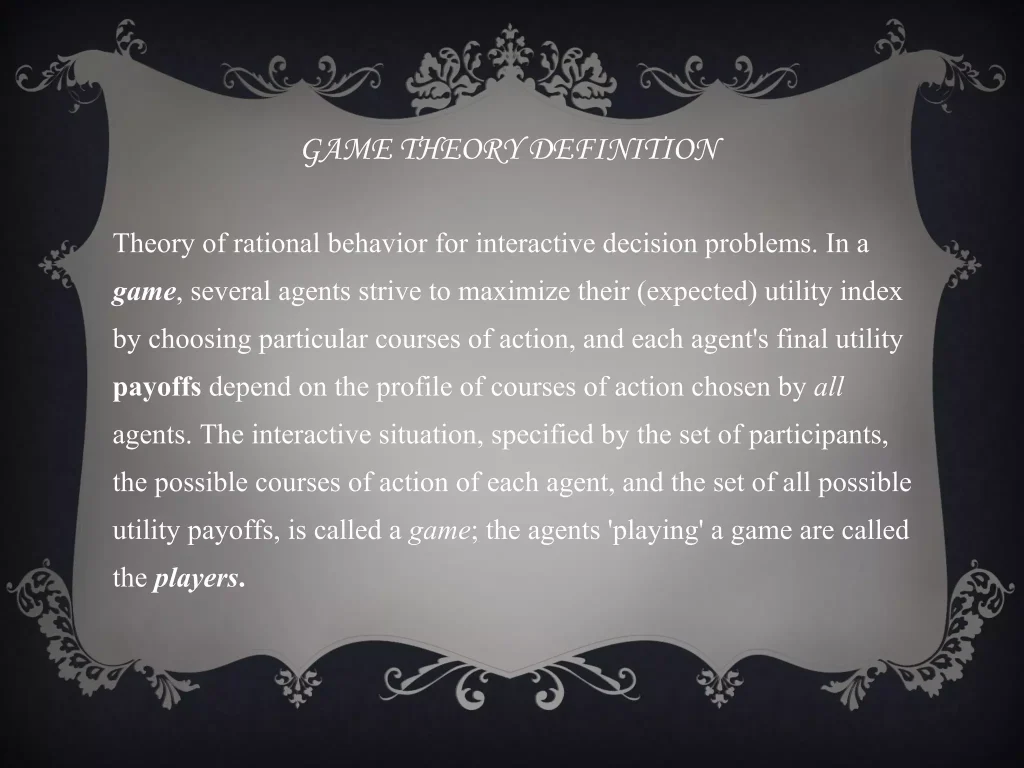
Game theory, a mathematical framework for understanding competitive situations, forms the backbone of strategic decision-making in various games. At its core, game theory analyzes how rational players make choices that maximize their benefits, especially when faced with adversarial conditions. This theoretical approach not only enriches the experience of strategy gaming but also helps clarify complex problem-solving methods that are transferrable to real-world scenarios.
To better appreciate the utility of game theory within strategy games, it is essential to explore some of its fundamental concepts, including the idea of the Nash equilibrium. Named after mathematician John Nash, this concept describes a situation where no player can gain an advantage by changing their strategy unilaterally, given that the other players keep their strategies unchanged. In games such as rock-paper-scissors, each player continually adapts to their opponent’s choices, illustrating the equilibrium point where strategies stabilize over time. Understanding this principle can help players recognize their opponent’s tendencies and refine their own strategies for maximum effectiveness.
- Payoff Matrix: Concepts like the payoff matrix lay the groundwork for players to evaluate potential actions and outcomes while accounting for the decisions of others.
- Prisoner’s Dilemma: This classic problem illustrates cooperation and competition. Players must choose between cooperating with one another for mutual benefit or betraying the other for personal gain.
- Zero-Sum Games: In these games, one player’s gain is equivalent to the other’s loss. Chess serves as an archetype, where each victory carries a definitive cost to the opponent.
Strategic thinkers can harness the insights gained from these principles not only in gaming but also in various sectors including business, economics, and politics. For example, in the corporate world, executives often face decisions akin to a strategic game when it comes to pricing, resource allocation, and market positioning. By applying mathematical models derived from game theory, they discern the best course of action to minimize risks while maximizing returns.
Moreover, the application of game theory extends to negotiation tactics and conflict resolution. Understanding the dynamics of competing interests enables individuals and organizations alike to craft win-win strategies. Instead of seeing negotiations as mere face-offs, game theory invites participants to view them as collaborative endeavors where the ultimate goal is finding the most advantageous agreements.
As players delve more deeply into the mathematics of strategy games and the implications of game theories, the capacity for improved decision-making becomes apparent. By recognizing patterns, weighing chances, and anticipating opponents’ moves, strategic gamers acquire a skill set that proves invaluable both in the gaming arena and beyond. This synthesis of mathematics, psychology, and strategy shapes a comprehensive approach to problem-solving that offers enduring benefits in the complexities of life.
The Mathematics of Strategy Games: Solving Problems Through Game Theories
In the realm of strategy games, the application of mathematical principles and game theories serves as a powerful tool for enhancing decision-making. Game theory, a branch of mathematics that studies interactions with formalized incentive structures, allows players to strategize optimally against opponents. The objective is not merely to win a single game, but to apply these strategies to a myriad of real-life scenarios, making the insights gleaned invaluable beyond the gaming table.As players engage with strategy games, they hone their analytical skills, learning to anticipate moves and counter-moves. This predictive skill is enhanced by understanding concepts like Nash Equilibrium, where players reach a state where no one can benefit from changing their strategy while others keep theirs unchanged. This equilibrium is pivotal in shaping tactics not just in games, but in economic and political arenas as well.Moreover, strategy games often incorporate elements such as probability and risk assessment. Players must calculate the likelihood of certain outcomes based on their choices and the choices of others. This mathematical approach promotes critical thinking and quantitative reasoning, which are essential skills in today’s data-driven world.For level-headed strategists, these principles can drastically affect outcomes, often dictating the difference between success and failure in complex situations. Thus, engaging with strategy games is more than just entertainment; it is an exercise in mathematics, critical thinking, and strategic foresight that builds a foundation for tackling multifaceted problems.To illustrate the impact of game theory on strategic thinking, consider the following table that highlights the advantages of mastering these concepts through gameplay:
| Category | Advantages |
|---|---|
| Analytical Skills | Enhanced problem-solving abilities through complex scenario analysis. |
| Decision-Making | Improved risk assessment as players learn to weigh outcomes before making choices. |
Through continued exploration of strategy games and the mathematical frameworks underpinning them, players not only enrich their gaming experience but also cultivate essential skills applicable in various aspects of life, from business to personal relationships. This marriage of mathematics and strategy is a compelling undercurrent that merits deeper investigation.
DISCOVER MORE: Click here to delve deeper
The Applications of Game Theory in Modern Strategy Games
The world of strategy games has evolved significantly with the incorporation of advanced game theory principles, fostering a more intricate form of gameplay that reflects real-world dilemmas. Contemporary titles like StarCraft II, Civilization VI, and Fortnite not only test a player’s tactical skills but also their understanding of mathematical strategies essential for success. These games showcase how theory can translate into practice, allowing players to develop a sharper sense of forecasting and adaptation.
In games such as StarCraft II, players often face resource management challenges and must predict opponents’ strategies while balancing their growth. This dynamic environment exemplifies concepts like mixed strategies, where players deliberately randomize their actions to prevent predictability. The more a player can effectively use a mixed strategy, the less their opponents can exploit their behavior, showcasing the application of game theory in gameplay decision-making.
- Optimal Strategy Development: Many games provide opportunities for players to simulate various strategies in practice matches, using trial and error to find optimal strategies. The mathematical underpinnings here highlight how players can use statistical analysis to assess the strengths and weaknesses of particular approaches, akin to ongoing real-time research methodologies in scientific fields.
- Dynamic Game Frameworks: Strategy games often involve evolving scenarios, requiring players to reassess strategies in light of new information. Players embedded in these dynamic frameworks frequently rely on Bayesian games, where they update their beliefs based on observable events. This mirrors real-world situations, such as stock market fluctuations driven by investor reactions to news.
Moreover, the role of cooperation versus competition in strategy games taps into fundamental social dilemmas studied through game theory. Multiplayer games often allow alliances that can shift throughout the duration of play, necessitating a keen awareness of trust dynamics. Games like Agar.io demonstrate how strategic partnerships can lead to mutualistic benefits while simultaneously testing players’ ability to predict betrayals or moves from their allies.
Furthermore, in the realm of competitive online gaming, platforms such as League of Legends introduce additional layers of strategy with team compositions and lane dynamics. The concept of Pareto efficiency can illustrate how certain team compositions yield overall better performance thresholds, providing analytical tools to help gamers dissect winning strategies — a practice reflecting strategies used in real business environments to enhance operational performance.
The applicability of game theory extends beyond gaming; it’s increasingly recognized in sectors such as behavioral economics, where businesses analyze consumer behavior by applying strategic frameworks that draw from their understanding of competitive interactions. For example, firms use game-theoretic models to predict competitor pricing or marketing strategies, reinforcing the wider implications of strategic games.
As the landscape of strategy games continues to evolve, so too does the mathematical framing of challenges players face. The use of game theory in these contexts equips participants with cognitive tools necessary for navigating complex decision-making scenarios— be it during intense gameplay or in the boardrooms of multinational companies. The merging of math, psychology, and competitive instinct transforms the art of strategy into a rich field of inquiry, encouraging continued exploration and application of these theories beyond the digital arena.
DISCOVER MORE: Click here to learn about the benefits
Conclusion
In summary, the intersection of mathematics and strategy games through game theory provides an engaging framework for understanding complex decision-making processes that resonate in both virtual and real-world environments. As players immerse themselves in titles like StarCraft II, Civilization VI, and Fortnite, they not only face the challenges of resource allocation and competition but also hone their analytical skills in a way that mirrors significant aspects of economic behaviors and strategic planning.
By applying concepts such as mixed strategies and Bayesian decision-making, players learn to adapt and react to evolving scenarios, strengthening their problem-solving capabilities. Furthermore, the dynamic relationships around cooperation and competition within multiplayer environments highlight crucial aspects of trust and alliance-building, underscoring the profound social implications rooted in our decision-making processes.
As the gaming industry advances, the principles of game theory are reshaping our approach to strategy not just in gameplay but also in business strategies and economic predictions. The deeper understanding of these mathematical underpinnings offers players and professionals alike tools necessary for navigating uncertainties in their respective fields, from high-stakes negotiations to competitive markets. Ultimately, the mathematical dimensions of strategy games extend well beyond entertainment, inviting exploration and innovation in various spheres of life.
With each playthrough, a new opportunity arises to grasp the fundamental concepts of strategy and decision-making, propelling both casual gamers and experts toward a more profound understanding of the critical relationship between mathematics and strategic thinking.
Related posts:
The Effect of Simulation Games on Real-World Problem Solving
The Impact of Board Games on Group Problem Solving: Collaboration and Creativity in Action
Unraveling Mysteries: How Puzzle Games Stimulate Critical Thinking and Creativity
The Psychology Behind Logic Games: How Problem Solving Can Improve Your Critical Thinking
Escape Games: How They Stimulate Problem Solving in High-Pressure Environments
The Influence of Word Games on Improving Cognitive and Problem-Solving Skills

Linda Carter is a writer and puzzle expert specializing in mind games, brain teasers, and cognitive challenges. With extensive experience helping individuals enhance their problem-solving skills and think critically, Linda shares her knowledge on our platform. Her goal is to empower readers with practical advice, engaging puzzles, and strategies to sharpen their minds and achieve success in the captivating world of mind games and puzzles.