The Evolution of Logical Thinking in Classic Board Games: A Historical Perspective
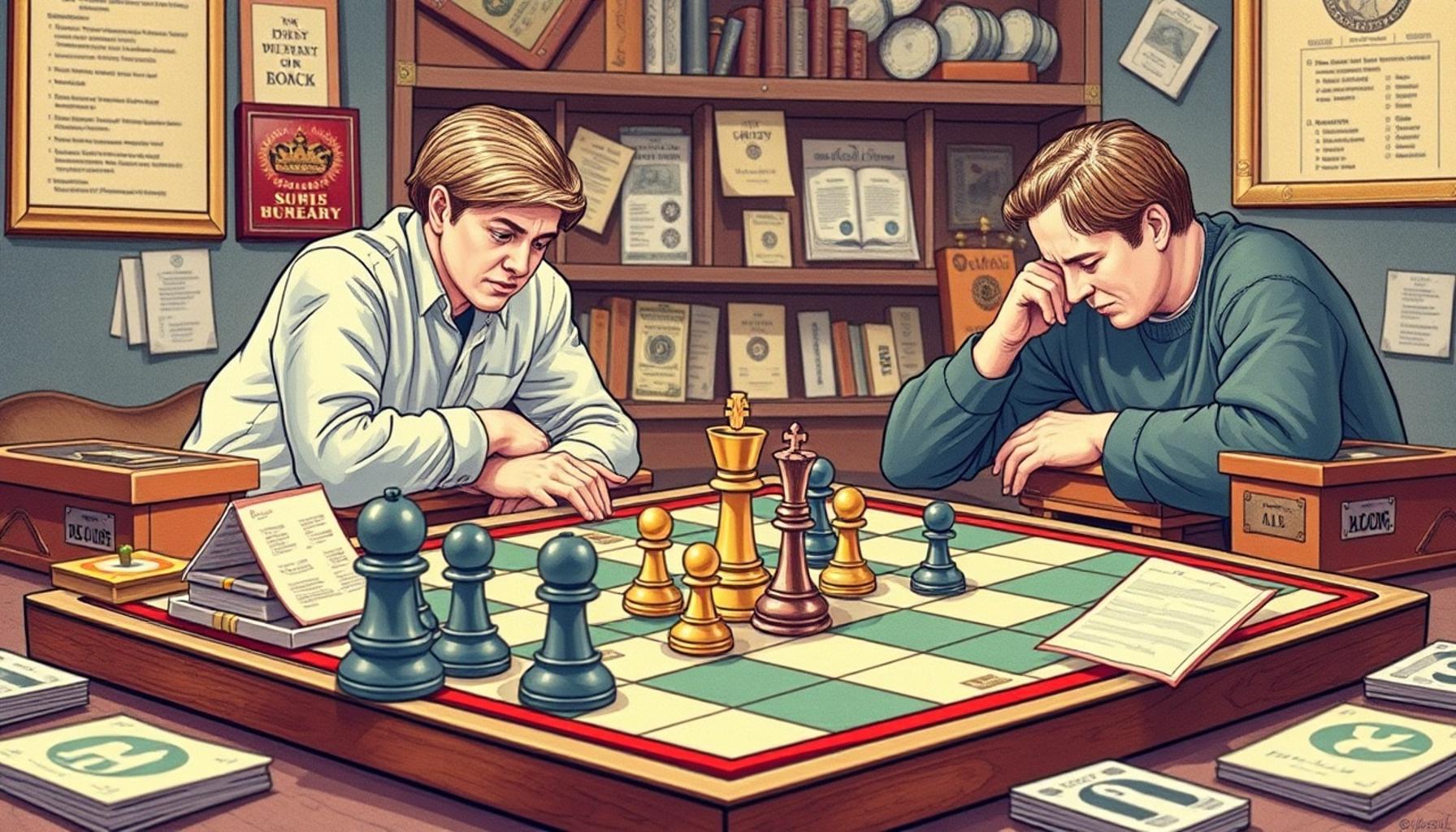
Chronicles of Cognitive Gameplay
The fascinating world of board games has always provided a unique playground for logical thinking and strategic planning. Originating in various cultures across the globe, these games have not only served as a source of entertainment but have also emerged as tools for enhancing cognitive skills. By examining the nuances of several classic board games, we can uncover how they have shaped our understanding of strategy, patience, and critical decision-making over centuries.
One of the most esteemed board games, Chess, dates back to the 6th century in India. Renowned for its depth and complexity, chess encourages players to think several moves ahead, honing skills like foresight and patience. Competitive chess communities thrive globally, from the casual clubs in local coffee shops to grand championships televised for millions. Players must grapple with each choice they make, which fosters resilience and the ability to predict opponents’ maneuvers, making it a rich ground for cognitive stimulation.
Go, originating in China over 2,500 years ago, requires players to occupy the most territory on the board. Its seemingly simple rules conceal an exhilarating complexity, where strategies can take years to master. For example, players must manage their own positions while simultaneously anticipating the moves of their opponents. The mental rigor involved in Go parallels real-life situations that demand resource management and foresight, offering profound insights into spatial awareness and decision-making processes.
Backgammon presents a unique blend of luck and strategy, as players must navigate their pieces around the board based on dice rolls while simultaneously planning a strategic path forward. The game necessitates adaptability, as players frequently need to reassess their strategies based on changing circumstances. This adaptability is a vital skill not only within the realm of board games but in everyday life, where challenges often require recalibration of our plans in response to unforeseen events.
In contrast, Checkers provides a more streamlined tactical challenge. Its accessibility makes it one of the first strategy games for children, imparting lessons on both offensive and defensive play. By engaging in checkers, players develop an understanding of the importance of positioning and tactical response, essential elements in various competitive environments.

Dominoes, with its myriad of game formats, promotes pattern recognition and spatial reasoning. Variants such as “Mexican Train” or “Blocking” lead to different strategic approaches and cognitive exercises. Through simple tile placement, players learn to anticipate their opponents’ moves and shape their gameplay accordingly, reinforcing the skill of prediction.
Collectively, these games not only serve as entertainment but also act as instruments that sharpen critical thinking skills in individuals. By tracing their rich histories, we can observe how these games reflect the intellectual currents of their eras and how societies have integrated them into cultural practices.
Ultimately, the exploration of these classic board games reveals an intricate web of connections between gameplay and the evolution of logical thinking across diverse cultures. Engaging with these games offers more than just a pastime; it provides a lens through which we can understand human intellect’s progression over time. Join us as we delve deeper into this captivating world and uncover the profound impact these classic games have had on fostering cognitive prowess in individuals worldwide.
LEARN MORE: Click here to delve deeper
The Strategic Roots of Logical Play
As we delve deeper into the historical context of classic board games, it becomes evident that each game serves as a reflection of the societal values and intellectual pursuits of its time. The evolution of logical thinking through these games can be traced by analyzing their origins, complexities, and the skills they cultivate in players. From ancient to modern times, board games such as Chess, Go, and others not only entertained but also shaped cognitive development and strategic reasoning.
The game’s origins often reveal their inherent logics and the cognitive challenges they present. For instance, Backgammon is believed to have originated in Mesopotamia around 3000 BC, making it one of the oldest known board games. Players engage in a duel of tactics and luck, striving to outmaneuver each other while keeping a watchful eye on risk management. This duality demonstrates how games can integrate randomness and strategy, leading to critical thinking about probability and decision-making. The balancing act required in Backgammon emphasizes the importance of adaptability, a skill that has significant applications in today’s fast-paced world.
To better understand the intellectual heritage of classic board games, we can explore the following key aspects:
- Cultural Significance: Each game embodies the philosophy and intellectual climate of its culture, representing how societies valued strategic thinking while providing a glimpse into ancient customs and social structures.
- Skills Development: Essential cognitive skills such as concentration, pattern recognition, and analytical thinking evolve through gameplay, providing not just entertainment but a pivotal platform for intellectual growth.
- Evolution of Game Mechanics: The transition of game mechanics from simple pieces to complex strategies over centuries illustrates the increasing sophistication of human thought processes.
- Interpersonal Dynamics: Many board games foster social interaction, requiring players to evaluate not only their strategies but also those of their opponents, enhancing skills pertinent for conflict resolution and negotiation.
As we reflect on the contributions of Checkers, which emerged from the ancient game of Alquerque around 3000 BC and made its way into the modern era, we observe that it has remained a vital tool for teaching logical reasoning to younger generations. Its straightforward rules allow players to develop intuition while also understanding advanced strategic concepts, illustrating how board games evolve to educate while entertaining.
Each of these classic games tells a story, contributing to the rich tapestry of intellectual development throughout human history. Tracing their historical lineage provides valuable insights into not only the games themselves but also the players and cultures that have embraced them. As we continue this exploration, we will further uncover how these timeless games have influenced cognitive evolution and the broader implications they hold for society today.
The evolution of logical thinking in classic board games reflects a fascinating interplay between culture, education, and strategy. Over centuries, these games have not only served as entertainment but have also been instrumental in developing critical thinking skills. For instance, chess, which dates back to the 6th century, has been utilized as a teaching tool for military strategy and problem-solving. Players must anticipate their opponent’s moves and devise counter strategies, thereby enhancing their cognitive abilities.
Another prime example is the game of Go, which originated in ancient China over 2,500 years ago. This game requires players to think several moves ahead, promoting a deep understanding of spatial reasoning and strategy. The complexities of Go make it a rich source of study for those interested in logical thinking patterns and decision-making processes. Scholars note that such games foster a sense of patience and perseverance, attributes that are essential in both educational and professional settings.
Furthermore, many classic board games, such as Monopoly and Risk, introduced economic and tactical concepts through gameplay. Monopoly teaches players about resource management and financial strategy, while Risk encourages strategic planning and negotiation skills. These aspects contribute to an understanding of broader socio-economic principles and can even serve as early lessons in leadership and teamwork.
As we delve deeper into the history of these games, we uncover how they mirror societal changes and technological advancements. The rise of digital gaming has also transformed our interaction with logical games; while the essence remains, the approach has evolved to integrate technology, creating new dynamics in logical reasoning and strategy development.
| Category | Benefits |
|---|---|
| Strategic Thinking | Enhances problem-solving and anticipatory skills. |
| Cognitive Development | Encourages reasoning and logical progression in decision-making. |
The study of these games offers an insightful glimpse into our intellectual heritage, illustrating how leisure activities can serve significant educational purposes. As we unravel the layers of history related to logical thinking in board games, it becomes evident that these games are not merely pastimes but are pivotal in shaping our cognitive landscapes.
DON’T MISS: Click here to discover how brain teasers can enhance children’s memory
The Rise of Complexity in Game Mechanics
As we traverse through the timeline of classic board games, one theme becomes increasingly apparent: the rise of complexity in game mechanics. Over the centuries, the transition from straightforward, simplistic games to intricate and multifaceted ones mirrors humanity’s intellectual evolution. This progression enhances logical thinking, pushing players to adapt their strategies in real time, ultimately fostering higher cognitive skills.
One exemplary case is the ancient game of Go, which originated in China over 2,500 years ago. Celebrated for its profound depth and strategic nuance, Go consists of a simple premise: players take turns placing stones on a grid to control territory. However, the sheer number of possible moves—estimated to be greater than the number of atoms in the observable universe—results in a vast array of strategies and outcomes. The game’s complexity demands a high level of spatial reasoning, foresight, and adaptability, encouraging players not only to think several moves ahead but to anticipate and counter their opponent’s strategies.
This transition toward advanced strategic thought can also be observed in the evolution of Chess, a game whose origins date back to the 6th century in India. As it traveled through Persia and into Europe, the game adapted not only its pieces and rules but also its role in society. By the Middle Ages, Chess was revered as a noble pursuit, an emblem of education and strategic thought ideal for the ruling class. Each piece’s movement mimics historical military tactics, reinforcing the game as a model of logical warfare. The need for players to develop complex opening theories and endgame strategies illustrates the gradual shift toward advanced logical reasoning that remains a hallmark of the game today.
Additionally, the introduction of modern board games such as Settlers of Catan in the late 20th century reflects an even further maturation of game mechanics. Its emphasis on resource management and negotiation strategies simulates the complexities of real-world economic systems. Players must engage in critical thinking to trade resources effectively while navigating alliances and rivalries, teaching vital lessons in collaborative problem-solving and economic reasoning. This game marked a pivotal movement in board game design, moving away from purely competitive frames of play to those that promote both competition and collaboration.
The Interplay of Cultural Influences and Logical Thought
The evolution of board games can also be viewed through the lens of cultural influences that have shaped their development. For instance, the Japanese game of Shogi, often referred to as Japanese Chess, incorporates unique rules, like the ability to use captured pieces against one’s opponent. This innovative mechanic adds another layer of depth to strategic thinking, encouraging players to think not only about their own pieces but also how to utilize their opponent’s moves to their advantage. Such cultural distinctions reveal how different societies have tailored their games, embedding local philosophies into the cognitive challenge they offer.
Exploring these historical nuances opens avenues for understanding the role of board games as educational tools. Research confirms that playing strategically demanding games fosters cognitive resilience and improves problem-solving abilities. So as we reflect on the journey and evolution of these classic board games, it becomes clear that they are not merely distractions; they are rich intellectual laboratories that continue to shape logical thinking across generations. Each move on the board encapsulates centuries of accumulated knowledge, inviting players to reflect on their strategies and adapt them to complex situations, a skill increasingly essential in the modern world.
DIVE DEEPER: Click here to discover how memory games can help
Conclusion: The Enduring Legacy of Board Games in Developing Logical Thought
In contemplating the rich history of board games, it becomes evident that their evolution is a mirror reflecting humanity’s intellectual journey. From the ancient strategies of Go and Chess to modern creations like Settlers of Catan, these games have transcended mere entertainment, becoming powerful tools for fostering logical thinking and strategic reasoning.
The shift from simplistic mechanics to complex systems not only showcases the sophistication of human thought but also emphasizes the crucial role of cultural influences in shaping the games we play. Each classic board game encapsulates specific societal values, challenges, and the educational benefits intrinsic to their design. The integration of diverse rules and strategies encourages players to develop a multifaceted approach to problem-solving and decision-making, skills that resonate well beyond the gaming table.
Moreover, contemporary research highlights the cognitive advantages derived from engaging in these intellectually demanding games. Skills such as critical thinking, adaptability, and strategic foresight are pivotal in navigating today’s fast-paced world. As board games evolve to adapt to modern sensibilities and collaborative play, they continue to challenge the intellect, prompting players to think critically and creatively.
As we look forward, it is incumbent upon us to recognize the intrinsic value of classic board games not just as relics of the past but as enduring platforms for individual and collective growth. Exploring the evolution of logical thinking within this context opens new avenues for understanding how these timeless games can enrich contemporary learning and engagement, ultimately influencing the cognitive landscape for generations to come.
Related posts:
Logical Thinking Strategies: How to Approach and Solve Logic-Based Games
The Role of Logical Thinking in Solving Complex Puzzles
The Connection Between Logical Thinking and Creative Problem Solving in Puzzles
How Digital Mind Games Are Transforming Logical Thinking Skills in the Modern Age
Exploring the Intersection of Emotional Intelligence and Logical Thinking in Puzzle Solving
The Benefits of Collaborative Logic Puzzles in Team Building and Communication

Linda Carter is a writer and puzzle expert specializing in mind games, brain teasers, and cognitive challenges. With extensive experience helping individuals enhance their problem-solving skills and think critically, Linda shares her knowledge on our platform. Her goal is to empower readers with practical advice, engaging puzzles, and strategies to sharpen their minds and achieve success in the captivating world of mind games and puzzles.