Mind Games and Puzzles: The Impact of Cognitive Training on Critical Thinking
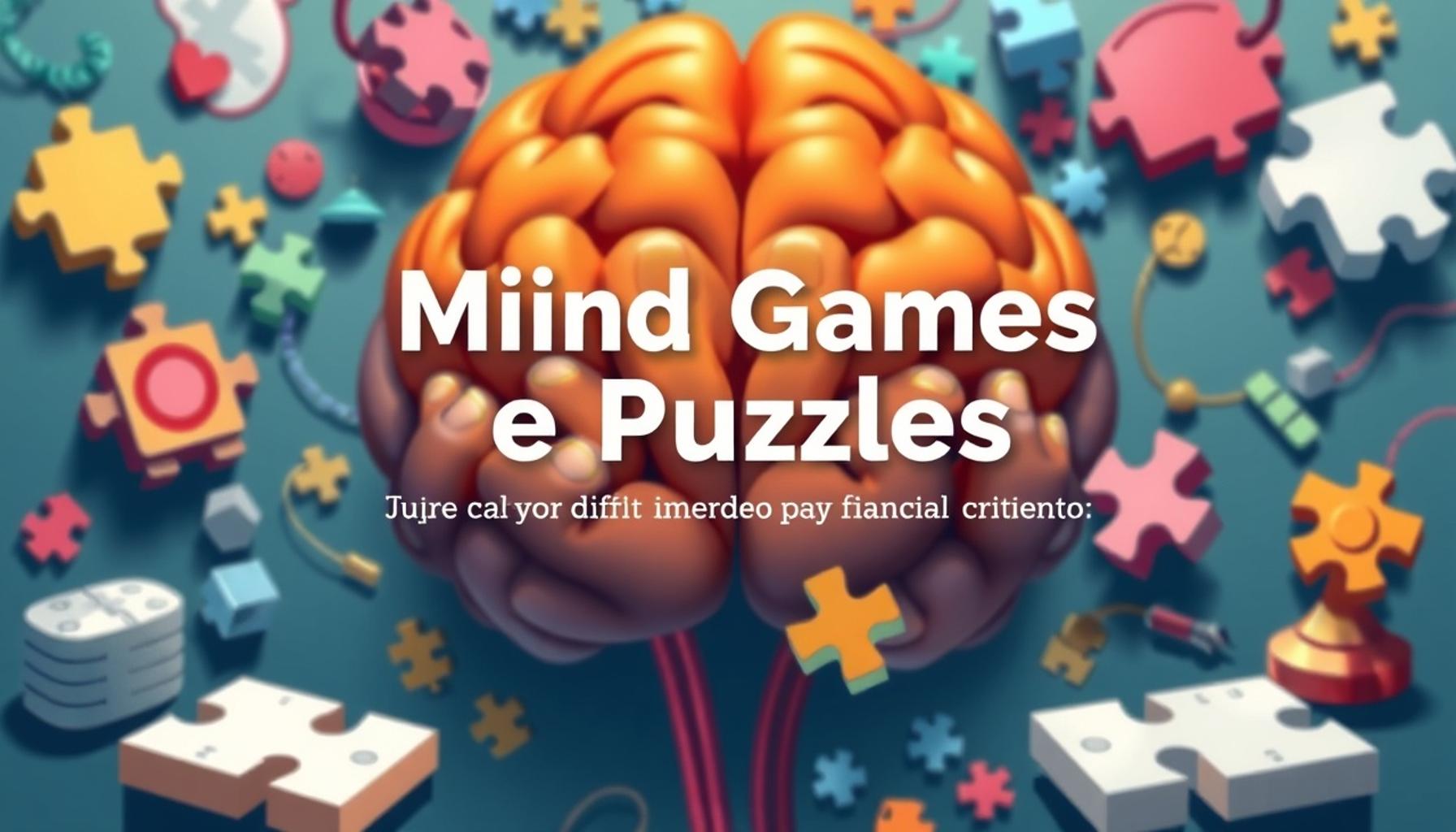
The Power of Cognitive Training
In an era marked by incessant information overload and relentless distractions, cognitive training has gained momentum as a vital tool for enhancing our critical thinking skills. As the demands of daily life grow, mental exercises in the form of games and puzzles have become more than just diversions; they are essential in honing our cognitive abilities. Such activities help us challenge our mental capacities and build resilience against cognitive decline.
Engaging in cognitive training can yield improvements in several key cognitive functions. For instance:
- Problem-solving abilities: Activities that stimulate critical thinking often require real-time solutions, helping individuals to develop quicker and more effective problem-solving strategies.
- Memory retention: Both short-term and long-term memory can be enhanced through activities that require recall and recognition.
- Attention span: Mind games are particularly effective in training the brain to sustain focus for extended periods, countering the typical distractions of contemporary life.
Research supports the notion that routine participation in these mental workouts can lead to marked advancements in daily decision-making and analytical thinking. For example, a comprehensive study conducted by the University of California revealed that individuals who engaged in brain-training games showed a significant enhancement in logical reasoning and processing speed. This improvement not only translated to better performance in cognitive tasks but also impacted their ability to navigate complex real-world situations more effectively.
As we explore the realm of mind games and puzzles, it’s enlightening to delve into the diverse activities that aid cognitive development:
- Crosswords and word searches: These activities sharpen vocabulary and general knowledge, relying heavily on memory and quick thinking.
- Sudoku and number puzzles: Numerical challenges stimulate logical reasoning and spatial recognition, essential for mathematical problem-solving.
- Strategy games like chess: Such games encourage planning, foresight, and the ability to anticipate an opponent’s moves, fostering a competitive yet analytical mindset.
These activities transcend mere entertainment; they have the potential to revolutionize our cognitive landscapes. By understanding their profound impact, we unlock new avenues for mental fortification, paving the way for enhanced learning experiences and sharper mental acuity. This exploration into cognitive training underscores the significance of staying mentally fit in a world that often prioritizes physical prowess. As you consider incorporating these activities into your routine, remember, every puzzle solved and game won is a step toward a more agile mind.

DISCOVER MORE: Click here to uncover the connection between mental agility and memory games
Exploring Effective Cognitive Training Activities
The landscape of cognitive training is rich and varied, providing enthusiasts with a myriad of choices that challenge and engage the brain. As we delve into the specific mind games and puzzles that facilitate the enhancement of critical thinking skills, it becomes evident that these activities offer more than mere enjoyment. They serve as vital instruments for mental conditioning and growth.
One of the most popular avenues for cognitive enhancement lies in the realm of word games. Activities such as crosswords and word searches not only entertain but also cultivate a robust vocabulary and improve general knowledge. By requiring players to recall and manipulate words quickly, these games engage various areas of the brain responsible for memory retention and linguistic processing.
The time-honored classic of Sudoku offers a numerical challenge that sharpens logical reasoning and fosters an appreciation for patterns. At its core, Sudoku requires players to fill a grid with numbers while adhering to strict rules, promoting vigilance and spatial recognition. Regular engagement with such puzzles can lead to notable improvements in mathematical problem-solving abilities, proving essential for students and professionals alike.
On a different spectrum, strategy games like chess serve as a battleground for cognitive training. Chess players must constantly predict their opponent’s moves and devise counter-strategies, requiring both foresight and critical thinking. This high-stakes environment cultivates a heightened sense of awareness and decision-making that extends beyond the game board, influencing how individuals navigate complex situations in daily life.
Beyond traditional games, brain-training apps have surged in popularity, reflecting a growing trend to gamify cognitive training. These digital platforms, such as Lumosity and Peak, offer a plethora of brain games specifically designed to target various cognitive functions. Users can enhance their memory, attention, and problem-solving abilities through personalized exercises suited to their individual goals. Research indicates that players experience measurable improvements in cognitive performance when regularly using these applications.
- Crosswords: Enhance vocabulary and memory recall.
- Sudoku: Stimulate logical reasoning and numerical skills.
- Chess: Foster strategic thinking and anticipatory skills.
- Brain-training apps: Offer customized cognitive exercises for diverse skill enhancement.
The potential for growth through cognitive training is profound. As more individuals recognize the value of mind games and puzzles, they are not only investing in their personal entertainment but also in the fortification of their intellectual capacities. This engagement lays the groundwork for lasting cognitive resilience, equipping people to meet the demands of an increasingly complex world. By prioritizing these activities, we can embark on a journey toward a sharper mind and enhanced critical thinking abilities.
| Cognitive Benefits | Types of Games |
|---|---|
| Enhanced Problem Solving | Strategy board games |
| Increased Memory Retention | Memory matching games |
| Improved Concentration | Puzzle games |
| Boosted Creativity | Creative thinking challenges |
Engaging with mind games and puzzles offers a plethora of advantages that extend beyond mere entertainment. These activities are not only enjoyable, but they also play a crucial role in enhancing various cognitive functions. For instance, engaging in strategy board games can lead to markedly improved problem-solving skills by encouraging players to think several steps ahead. Similarly, memory matching games have been shown to significantly increase memory retention, making them valuable tools for individuals of all ages looking to bolster their cognitive recall.Moreover, puzzle games contribute to enhanced concentration, requiring players to maintain focus over extended periods, thereby training the brain to concentrate more effectively in everyday tasks. Additionally, challenges that stimulate creative thinking can also boost creativity, making them essential tools for anyone looking to enhance their innovative capabilities. The fusion of these cognitive benefits highlights the importance of incorporating such games into your daily routine. As research continues to unveil the depths of how cognitive training can impact critical thinking, the allure of mind games and puzzles becomes increasingly compelling.
EXPLORE MORE: Click here to uncover effective strategies
Harnessing the Power of Collaborative Puzzles
While individual games can enhance cognitive functions, the collaborative aspect of certain puzzles and games should not be overlooked. Team-based challenges, such as escape rooms and interactive trivia games, not only promote critical thinking but also foster teamwork and communication skills. By working with others to solve complex problems in real time, individuals experience an engaging way to develop their reasoning abilities and social intelligence simultaneously.
Escape rooms, which have gained notoriety in urban entertainment centers, demand collective problem-solving under pressure. Participants must decipher clues and make decisions rapidly, requiring a balance of creativity and logic. Research has shown that engaging in these group activities can significantly boost one’s ability to generate innovative ideas, a core component of critical thinking. Furthermore, the discussions that ensue during the gameplay can aid in honing negotiation and persuasive skills, essential for effective communication.
- Escape Rooms: Cultivate teamwork and real-time problem-solving skills.
- Interactive Trivia Games: Enhance knowledge retention and collaborative reasoning.
Logical Puzzles: A Foundation for Analytical Skills
In addition to collaborative experiences, traditional logical puzzles such as cross-bridging and challenges like the Monty Hall problem are instrumental in developing analytical skills. These puzzles push individuals toward understanding probability and logical reasoning, enriching their cognitive toolkit. The Monty Hall problem, for example, not only baffles contestants on game shows but also serves as an intriguing exploration of decision-making under uncertainty, prompting participants to embrace a critical approach to analysis.
Moreover, engaging with logical puzzles has been linked to increased mental flexibility, enabling individuals to consider multiple solutions to a problem rather than fixating on a single answer. For learners in mathematics and science, these puzzles can facilitate deeper comprehension of concepts, aiding both their academic pursuits and everyday decision-making processes.
Role of Technology in Cognitive Training
As technology continues to evolve, so too does its role in cognitive training. Virtual reality (VR) and augmented reality (AR) have entered the domain of mind games, providing immersive environments for enhancement of critical thinking skills. With applications targeting various cognitive challenges—from memory recall to strategic planning—these innovative platforms bring traditional notions of puzzles into modern contexts.
For instance, VR platforms can simulate real-world scenarios requiring critical decision-making, allowing users to practice their skills in risk-free environments. Studies show that individuals participating in VR cognitive training exhibit improved problem-solving abilities and focus, setting a precedent for the potential of technology in cognitive development. The adaptability of these programs means users from diverse demographics can engage in tailored cognitive training designed to meet their unique needs.
- Logical Puzzles: Enhance analytical thinking and decision-making.
- Virtual Reality Training: Simulate real-world challenges to develop critical thinking.
With the convergence of traditional and technological methodologies for cognitive training, the breadth of opportunities to enhance critical thinking continues to expand. As individuals engage with various puzzles and games, they forge a path not only toward personal enjoyment but also toward profound cognitive development. This pursuit equips them with essential tools to navigate the complexities of daily life and unexpected challenges, ultimately underscoring the importance of mind games and puzzles in broader cognitive advancement.
DIVE DEEPER: Click here to discover the impact of word games
Conclusion
In an ever-evolving world characterized by rapid change and complex challenges, the significance of cognitive training through mind games and puzzles cannot be overstated. These engaging activities not only serve as a means of entertainment but also play a pivotal role in enhancing critical thinking and analytical skills. By embracing both collaborative and individual puzzles, individuals can cultivate essential abilities that enrich their personal and professional lives.
From traditional logical puzzles that sharpen our reasoning and decision-making abilities to modern immersive experiences like virtual reality games that create lifelike problem-solving scenarios, the methods to nurture our minds are diverse and accessible. As technology advances, we find ourselves equipped with increasingly sophisticated tools that support cognitive development, making cognitive training more engaging than ever. Scientific studies continue to validate the substantial positive impact these activities have on our brains, reinforcing the idea that investing time in mind games is not just playful diversion but a vital component of lifelong learning.
Ultimately, as we navigate the complexities of daily existence, empowering ourselves with critical thinking skills through the medium of mind games and puzzles opens doors to better decision-making, enhanced collaboration, and superior problem-solving capabilities. Thus, whether you are competing in an escape room or challenging a friend to a trivia duel, you are not merely playing a game; you are honing the cognitive tools necessary to thrive in an intricate world. Dive into the realm of mind games and embrace the journey toward cognitive excellence—it’s a pursuit that promises both enjoyment and empowerment.
Related posts:
The Role of Visual Puzzles in Learning Techniques for Solving Complex Problems
Escape Games: How They Stimulate Problem Solving in High-Pressure Environments
The Influence of Word Games on Improving Cognitive and Problem-Solving Skills
Developing Resilience Through Mental Challenges: The Importance of Logic Games
The Mathematics of Strategy Games: Solving Problems Through Game Theories
Unraveling Mysteries: How Puzzle Games Stimulate Critical Thinking and Creativity

Linda Carter is a writer and puzzle expert specializing in mind games, brain teasers, and cognitive challenges. With extensive experience helping individuals enhance their problem-solving skills and think critically, Linda shares her knowledge on our platform. Her goal is to empower readers with practical advice, engaging puzzles, and strategies to sharpen their minds and achieve success in the captivating world of mind games and puzzles.