Logical Challenges: Exploring the Importance of Mental Games in Education

The Power of Mental Games in Education
In a world where educational methodologies are continuously adapting, mental games stand out as innovative and effective tools in enhancing cognitive abilities for students of all ages. While traditionally viewed as mere entertainment, these games serve numerous educational purposes, seamlessly integrating learning with play. Their significance in boosting critical thinking, problem-solving, and creativity cannot be overlooked.
Enhancement of Cognitive Skills
Engaging in activities such as puzzles, chess, and strategic board games stimulates brain activity and fosters cognitive development. For example, studies show that chess players often exhibit improved analytical skills and a heightened ability to anticipate consequences based on their moves. When students participate in solving logic puzzles, like Sudoku or mathematical riddles, they sharpen their reasoning skills and learn to approach problems systematically. Such activities not only improve cognitive agility but also prepare students for complex tasks they may encounter in academia and life.
Promotion of Social Skills
Mental games are inherently social, encouraging collaboration and communication among players. Games like Settlers of Catan or collaborative escape room challenges require teamwork, where effective communication is vital to achieving shared goals. These interactions help build trust and strengthen relationships among peers, which is essential for creating a positive learning environment. By engaging in joint problem-solving efforts, students gain valuable social experiences that translate into real-world applications, preparing them for teamwork in future career endeavors.
Development of Resilience
One of the often-overlooked benefits of mental games is their role in developing resilience. Engaging with challenging scenarios teaches students the importance of perseverance and learning from their mistakes. For instance, when playing a game such as poker, players learn to assess risk, make strategic decisions, and cope with losses. This ability to bounce back from setbacks is crucial in both academic and personal growth, helping students understand that failure is a stepping stone to success.
Research indicates that students who regularly participate in logical challenges tend to perform better academically. Numerous schools across the United States have begun incorporating programs that focus on logic exercises and problem-solving games into their curricula. These initiatives have produced impressive results, including significant improvements in standardized testing scores and enhanced student engagement.
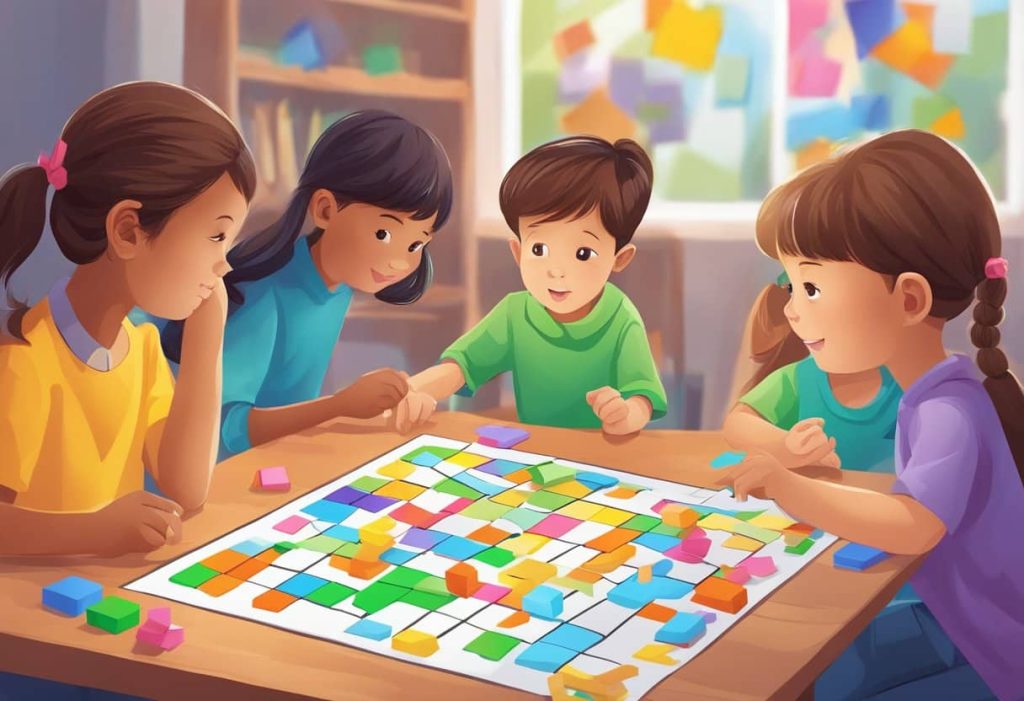
As educators and parents continuously seek innovative methods to captivate young learners, understanding the significance of mental challenges becomes essential. Embracing mental games as educational tools paves the way for a more dynamic and engaging learning experience, inspiring students to develop a lifelong passion for learning while honing their essential cognitive skills.
DISCOVER MORE: Click here to dive deeper
Unlocking the Potential of Mental Games
Mental games are increasingly recognized as a vital component of contemporary educational strategies, expertly blending cognitive development with enjoyable activities. The integration of these games in classrooms nationwide is not just a trend but a testament to their effectiveness in fostering a range of essential skills. By engaging students in problem-solving exercises that challenge their logic, reasoning, and creativity, educators can unlock a wealth of potential that transcends traditional teaching methods.
Understanding Logical Challenges
At the heart of mental games are logical challenges that require participants to think critically and strategically. These challenges can take many forms, allowing for a versatile approach to learning. Examples include:
- Logic puzzles and riddles: These stimulate students’ critical thinking by requiring them to deduce solutions through careful analysis and reasoning.
- Chess and strategy board games: Playing chess not only sharpens mental acuity but also teaches students the value of planning, foresight, and adaptability, essential traits for both academic success and life challenges.
- Mathematical problem-solving scenarios: Incorporating real-world math challenges engages students practically, allowing them to appreciate the relevance of mathematics in their daily lives.
- Memory games: These enhance concentration and recall abilities, fundamental skills that support learning across all subject areas.
- Creative storytelling exercises: By encouraging imaginative thinking, students learn to articulate their ideas and develop narrative techniques that bolster their writing skills.
Each of these activities prompts students to approach problems with a creative mindset, encouraging them to explore different perspectives and develop unique solutions. As students engage with these challenges, they learn persistence in the face of difficulty, an essential feature of intellectual growth. Challenging students intellectually not only fortifies their ability to navigate complex concepts but also cultivates a thoughtful, inquisitive mindset that is crucial for academic success.
Educational Insights into Mental Games
Research has consistently shown that students who frequently engage with mental games exhibit enhanced academic performance across a range of subjects. A recent study conducted by the American Psychological Association found that children who participated in regular logic games outperformed their peers in mathematics and reading comprehension by up to 30%. This improvement can be attributed to the heightened cognitive skills developed through consistent practice.
Moreover, schools adopting these mental exercises have reported an increase in student engagement and enthusiasm for learning. For instance, programs like Math Olympiads and National Puzzle Day encourage schools to cultivate problem-solving arenas where students can showcase their skills in a competitive yet collaborative environment. Such initiatives are invaluable, as they not only refine academic abilities but also promote a sense of community—a key aspect of a well-rounded education.
In the digital age, apps and online platforms are also harnessing the power of mental games to enhance learning. For instance, platforms like Lumosity and Brain Bloop offer personalized challenges that adapt to individual skill levels, promoting self-paced learning that is often more engaging than traditional methods. Additionally, educators can utilize educational games aligned with state standards, ensuring that students are not only entertained but also learning essential curriculum content in an interactive manner.
As educational paradigms shift to accommodate diverse learning styles, mental games offer an engaging solution that meets the need for interactive and stimulating education. By prioritizing logical challenges, educators can effectively create an environment ripe for exploration, ensuring students are equipped with the necessary tools to succeed in both academic settings and the complexities of everyday life. Thus, recognizing the role of mental games in education not only enhances learning experiences but also prepares students for a future that demands critical thinkers and creative problem-solvers.
| Advantages | Key Features |
|---|---|
| Enhanced Cognitive Skills | Mental games promote critical thinking, problem-solving, and decision-making. |
| Boosts Engagement | Incorporating games into education fosters a more interactive and enjoyable learning environment. |
The significance of mental games in education is becoming increasingly evident. These activities not only serve as entertainment but also as essential tools for developing critical cognitive skills. Students engaged in these logical challenges are more adept at navigating complex scenarios, enhancing their problem-solving capabilities while fostering a deeper understanding of the material.Additionally, mental games have a profound impact on student engagement. By introducing fun and interactive learning methods, educators can create an environment where students feel motivated to participate actively. This approach not only makes learning more enjoyable but also cultivates a sense of competition and collaboration among peers, further enriching the educational experience. To explore more about how to integrate these cognitive games effectively into curriculums, continuing research and exploration in this area is crucial.
DISCOVER MORE: Click here to delve deeper
Enhancing Critical Thinking through Interactive Learning
As the educational landscape evolves, there is an increasing recognition of the necessity to foster critical thinking skills among students. Mental games serve as a dynamic avenue for this objective, enabling learners to approach problems analytically. By incorporating games such as Sudoku, logic grid puzzles, and escape room activities into the curriculum, educators can scaffold critical thinking in ways that are both engaging and effective.
Building Resilience through Structured Challenges
One of the most compelling aspects of mental games is their ability to teach resilience—the capacity to recover from setbacks. Challenges inherent in these games require players to experience failure in a controlled environment, promoting gradual improvement. For instance, students who regularly engage in platform games that require strategic planning and decision-making develop a growth mindset, learning that persistence is key to overcoming obstacles. According to a report by the Institute for Educational Sciences, students who participated in structured games showed a 25% increase in their ability to handle academic pressure effectively.
Collaboration and Social Skills Development
Additionally, mental games enrich social interaction, which is vital in a collaborative learning environment. Team-based strategy games encourage students to communicate ideas, negotiate roles, and engage in collective problem-solving. Through these interactions, they develop social skills essential for teamwork and leadership—both critical components of success in the modern world. A study published in the Journal of Educational Psychology illustrated that students participating in group-based logic games saw a marked increase in empathy and cooperation, with remarkable implications for classroom culture.
- Team-building activities: Games like “Capture the Flag” or cooperative puzzles enhance team dynamics, making students more receptive to diverse ideas.
- Role-playing exercises: Engaging in role-playing games fosters interpersonal understanding, encouraging students to consider perspectives outside their own.
These experiences reinforce the idea that education is not merely about academics; it’s also about cultivating well-rounded individuals capable of thriving in community settings. In a nation grappling with division, fostering empathy and understanding through mental games can be a vital step toward cohesive future societies.
Integrating Technology: A New Frontier
As educators continue to explore the potent effects of mental games, technology has emerged as a significant ally. Learning platforms such as Kahoot! and Quizlet, which gamify traditional learning content, engage students in meaningful ways. By utilizing technology to create interactive quizzes and brain teasers aligned with curricular content, teachers can enhance classroom dynamics. These platforms also allow for real-time feedback, which is crucial for sustaining student motivation and engagement.
Furthermore, researchers suggest that the integration of augmented reality (AR) into mental games could revolutionize educational experiences. AR can create immersive environments where students can tackle logical challenges in captivating settings, thus bridging the gap between digital engagement and real-life application. By making learning multidimensional, students stand to gain a deeper understanding of complex concepts, especially in subjects like science and mathematics.
In summary, mental games offer the tools necessary for enriching educational experiences, enhancing critical thinking skills, and promoting collaboration among peers. The application of logical challenges in classrooms provides a multi-faceted approach to learning, equipping students with not only academic knowledge but also vital life skills that are essential in today’s fast-paced world.
DON’T MISS: Click here to delve deeper
Conclusion: The Future of Learning through Logical Challenges
In an ever-changing educational landscape, the integration of mental games presents a compelling avenue for transformative learning. As we’ve explored, these logical challenges not only enhance critical thinking skills but also build resilience and promote social skills among students. By fostering an environment where failure is seen as a stepping stone to success, mental games cultivate a growth mindset essential for students to navigate both academic and life challenges.
Moreover, the advent of technology offers exciting opportunities for educators to enrich their classrooms. Platforms like Kahoot! and Quizlet enable teachers to facilitate interactive, engaging lessons, while innovations such as augmented reality can further immerse students in logical problem-solving scenarios. These tools not only keep learners engaged but also tailor educational experiences to diverse learning styles, making education more accessible and effective.
Ultimately, embracing mental games in education goes beyond the mere acquisition of knowledge. It fosters a more holistic development of students, equipping them with the analytical skills, teamwork abilities, and emotional intelligence necessary for success in the modern world. As stakeholders in education continue to champion these frameworks, they pave the way for an enriched learning experience that prepares individuals not just for exams, but for life.
As the dialogue around education evolves, it is crucial for educators, parents, and policymakers to acknowledge the profound impact of logical challenges. Together, we can foster a generation of thinkers and problem-solvers who will shape a more collaborative and innovative future.
Related posts:
The Role of Logical Thinking in Solving Complex Puzzles
Enhancing Cognitive Skills Through Mind Games: A Focus on Logical Reasoning
Using Logic Puzzles to Strengthen Decision-Making Skills
The Evolution of Logical Thinking in Classic Board Games: A Historical Perspective
How Age-Appropriate Logic Games Can Develop Critical Thinking in Children
Exploring the Cultural Variations in Logical Thinking Through Traditional Puzzles

Linda Carter is a writer and puzzle expert specializing in mind games, brain teasers, and cognitive challenges. With extensive experience helping individuals enhance their problem-solving skills and think critically, Linda shares her knowledge on our platform. Her goal is to empower readers with practical advice, engaging puzzles, and strategies to sharpen their minds and achieve success in the captivating world of mind games and puzzles.