Exploring the Cultural Variations in Logical Thinking Through Traditional Puzzles
The Role of Cultural Diversity in Shaping Logical Thought
Traditional puzzles around the world not only challenge the mind but also serve as cultural artifacts that reflect the unique epistemological foundations of various societies. Each puzzle provides insights into how different cultures employ logic and reasoning, revealing much about their values and modes of thinking.
One category of puzzles that showcases this cultural influence is mathematical puzzles. Prominently found in many Asian cultures, these puzzles often emphasize numerical problem-solving and mental calculation. For example, the Japanese game of *sudoku*, which has gained global popularity, requires players to use logic to fill a grid with numbers, thereby reflecting aspects of structure and order that are highly valued in Japanese society. Similarly, ancient Chinese mathematical riddles, such as the *Nine Chapters on the Mathematical Art*, illustrate complex problem-solving techniques that emerged from a rich tradition of scholarly pursuit.
Another intriguing category is riddles, which holds a significant place in many African and Indigenous cultures. These challenges often incorporate elements of storytelling, where the structure of the riddle itself contributes to the cultural narrative. In African folklore, riddles serve not merely as entertainment but also as educational tools that promote linguistic creativity and social cohesion. A well-known example is the *Togolese riddle*, which plays on language and metaphor, compelling listeners to think critically about meaning and context. Such riddles can deepen community ties and enhance intergenerational communication.
The logic games prevalent in Western traditions tend to focus on structured reasoning and strategic thinking. These games often require a systematic approach to problem-solving. Classic games like chess, which has roots in Eastern origins, have been adapted into numerous formats, teaching players to anticipate opponents’ moves and strategize accordingly. Logic puzzles found in newspapers and magazines, such as crosswords and logic grids, engage readers in a form of mental exercise that sharpens their analytical skills.
As we delve deeper into these diverse intellectual challenges, it becomes evident that puzzles not only entertain but also play a crucial role in developing cognitive abilities. By engaging with traditional formats across cultures, enthusiasts can appreciate how different societies nurture logical thinking through their distinctive cultural lenses. This exploration opens avenues for understanding the human mind’s intricacies and the universal aspects of reasoning.
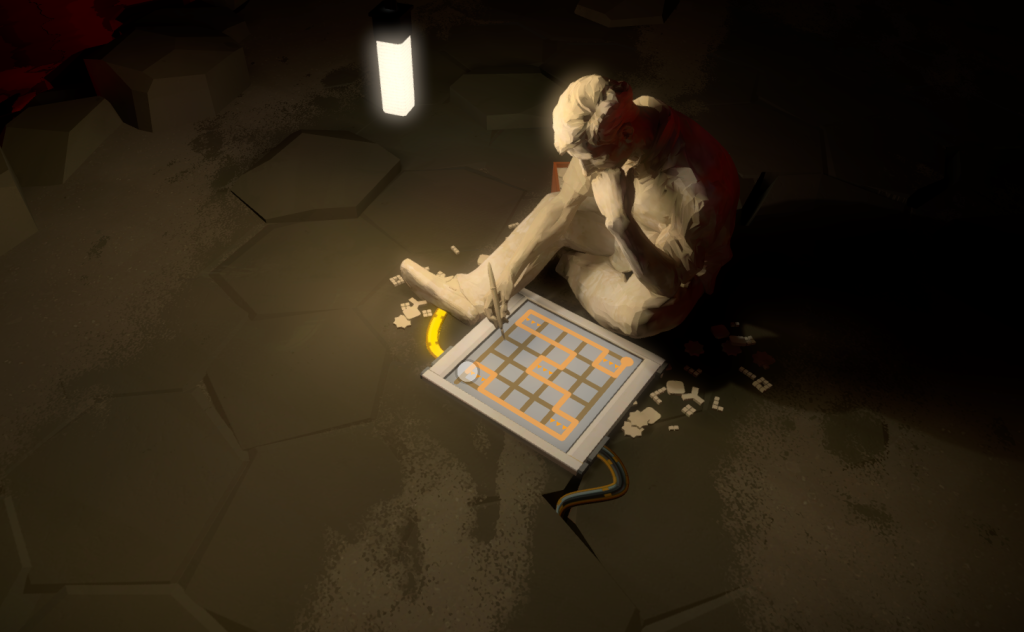
For those intrigued by the interplay between culture and cognition, the world of traditional puzzles is a treasure trove of knowledge. Whether you are a seasoned puzzle solver or new to this intriguing domain, engaging with these cultural artifacts can enrich your intellectual journey and offer a broader perspective on the world around you.
DISCOVER MORE: Click here to unlock the secrets of logical thinking
The Intersection of Puzzles and Cultural Identity
To truly appreciate the role of traditional puzzles in shaping logical thinking, one must recognize how these intricate challenges are steeped in the cultural identity of their origin. Puzzles are not mere sequences of numbers or letters; they are reflections of philosophical beliefs, societal values, and historical narratives. By examining these cultural variations, we can unearth how different communities approach problem-solving and cultivate reasoning skills.
Indigenous cultures often utilize puzzles as a medium for passing down wisdom and knowledge, with a heavy emphasis on communal learning. For instance, various tribes in North America employ puzzles in storytelling, where the solution to a puzzle might reveal a moral lesson or a truth about the natural world. The use of visual puzzles—often created from natural materials such as stones or plants—serves both as a means of entertainment and a way to engage cognitive faculties within a shared context. Such practices underscore the significance of relationships—between the individual and the community, and between the problem and its cultural context.
On the opposite side of the globe, in Scandinavia, traditional puzzles take on a unique form known as “Bryggen” or logic riddles, steeped in the region’s folklore. This style often incorporates elements of local wildlife, nature, and daily life, inviting solvers to navigate through allegorical narratives. A classic example is the “Three Hats” riddle, where the solver must deduce the color of their own hat based on what others can see and their subsequent reactions. This puzzle not only sharpens analytical skills but also addresses social dynamics and the role of information and deception in human interaction.
A further examination of global puzzles reveals an enriching tapestry of mathematical challenges. In the Western world, puzzles often prioritize logical reasoning rooted in formal mathematics, such as the classic logic grid puzzles found in many magazines and online platforms. These puzzles require solvers to make deductions based on a set of premises, honing skills in both critical thinking and structured analysis. In classrooms across the United States, educators often use these puzzles to foster a growth mindset among students, teaching them that persistence and strategy are crucial components of problem-solving.
Consider this list showcasing some popular traditional puzzles around the world and the cognitive skills they enhance:
- Sudoku: Emphasizes logical reasoning and pattern recognition.
- Math Riddles (e.g., Nine Chapters): Cultivates arithmetic and problem-solving skills.
- Three Hats Riddle: Develops inference and deductive reasoning.
- Riddles from African Folklore: Enhances linguistic creativity and cultural understanding.
As we continue to explore these intersections between puzzles and cultural identity, it becomes clear that engaging with these traditional challenges is more than just a recreational activity; it is a gateway to understanding how culturally ingrained practices shape the way societies think and reason. The profound influence of culture on the methods of logical reasoning sets the stage for a deeper exploration of how these puzzles can unite rather than divide, reflecting a shared human experience through the lens of cognitive diversity.
In the quest to understand how different cultures approach logical thinking, traditional puzzles serve as a fascinating lens. These puzzles, ranging from ancient riddles to intricate brainteasers, not only challenge our reasoning skills but also reflect the unique cognitive styles rooted in diverse cultural backgrounds. For instance, the Japanese puzzle known as “sudoku” emphasizes pattern recognition and logical deduction, while the Chinese “Tangram” requires spatial awareness and creativity. The evolution of these puzzles often correlates with historical events, cultural narratives, and societal values, revealing deep insights into the ways in which a community perceives the world around them. For example, in many Western cultures, puzzles often feature a linear progression of thought, aligned with a more structured approach to problem-solving. In contrast, some Indigenous cultures may utilize storytelling elements within their puzzles, integrating them with oral traditions that emphasize holistic understanding rather than strict logic.Furthermore, puzzles can encompass moral or philosophical dilemmas, challenging solvers not just to think logically, but also to reflect on values and ethics. This blend of logic and culture enhances our appreciation for the cognitive diversity across the globe and encourages us to engage with and learn from these variations. As these traditional puzzles are revisited in modern education and recreational contexts, they present opportunities for cross-cultural exchanges. Exploring these differences not only enriches our understanding of logical thinking but also promotes an appreciation for the cultural narratives that shape our cognitive processes. The interplay between logic and tradition invites us to delve deeper into the intricate tapestry of human thought, sparking curiosity and fostering global connections. By embracing the diversity of logical reasoning found in traditional puzzles, individuals can enhance their own problem-solving skills while gaining a broader perspective on the world. The engagement with these cultural artifacts offers an avenue for developing critical thinking abilities and encourages an appreciation for the richness of human intellectual heritage.
| Cultural Variations | Insights |
|---|---|
| Japanese Sudoku | Emphasizes logical deduction and pattern recognition. |
| Chinese Tangram | Promotes creativity and spatial awareness through geometric shapes. |
| Indigenous Story Puzzles | Integrates problem-solving with moral and ethical narratives. |
DISCOVER MORE: Click here to learn about the science of mental agility
Shared Challenges and Cognitive Diversity
As we delve deeper into the fascinating world of traditional puzzles, it becomes evident that these challenges serve not only as entertainment but also as tools for cognitive development across various cultures. This exploration reveals the intricate relationship between logical thinking and cultural narratives, influencing how individuals perceive challenges and devise solutions.
In Asia, logic puzzles often manifest through historical and cultural motifs, fostering skills that extend beyond mere calculation. The classic Japanese puzzle, Kakuro, for example, requires solvers to fill in a grid based on mathematical clues. This pastime not only sharpens numerical acumen but also emphasizes the interplay of strategy and teamwork, as these puzzles are frequently enjoyed in groups. Much like the intricate art of weaving in Japanese culture, where patterns emerge through the careful alignment of threads, Kakuro encourages a similar form of deliberate creativity in logical reasoning.
Another illustrative example can be found in the traditional Chinese puzzle known as the Chinese Remainder Theorem. This ancient mathematical concept and the puzzles derived from it illustrate how cultural narratives can seamlessly integrate mathematics with philosophical thought. Here, solvers are guided through layers of complexity that mirror the overarching principles of balance and harmony, values deeply embedded in Chinese culture. By engaging with such puzzles, individuals not only enhance their logical thinking but also absorb cultural wisdom through problem-solving.
Moving to the Middle East, we unearth a treasure trove of mathematical riddles and logical games that echo the region’s rich heritage of scholarship. The ever-popular Shahrazad riddles—featured in the tales of the “One Thousand and One Nights”—require listeners to engage their critical thinking while unraveling plots that often hinge on clever trickery or linguistic play. These riddles reinforce the notion of storytelling as a means of imparting wisdom and intellectual prowess, bridging the gap between entertainment and education.
In contrast, African cultures often envelop traditional puzzles within a rich oral tradition. Riddles from West African folklore exemplify how language can be used to challenge not only cognitive skills but also social understanding. These puzzles typically possess a dual purpose: to entertain and to instill lessons about community values and moral conduct. The riddle, “What has roots as nobody sees, is taller than trees?” encourages solvers to think metaphorically while navigating the complexities of their environment, enhancing their cognitive agility.
The cognitive challenges posed by traditional puzzles are more than just intellectual exercises; they highlight the diverse pathways through which cultures cultivate logical thinking. Whether through mathematics, storytelling, or intricate patterns, each puzzle encapsulates a worldview that enriches the human experience. This profound connection invites further inquiry into how these puzzles can be embraced in modern education to foster critical thinking and cross-cultural understanding.
Ultimately, as we analyze these diverse traditional puzzles, we catch a glimpse of the cognitive diversity that shapes not only individual mindsets but also collective problem-solving approaches across the globe. The inherent creativity and cultural significance embedded in these puzzles enhance our appreciation for logical reasoning as a universally shared yet uniquely expressed human trait.
DIVE DEEPER: Click here for advanced strategies
Conclusion: A Tapestry of Logic and Culture
In exploring the captivating intersection of cultural variations and logical thinking through traditional puzzles, we uncover a rich tapestry that binds various societies together yet celebrates their distinct identities. The puzzles we examined—ranging from Asia’s mathematical enigmas to Africa’s metaphorical riddles—serve as invaluable instruments for nurturing cognitive skills while simultaneously carrying the weight of cultural narratives and values.
This journey illuminated how traditional puzzles are more than mere entertainment; they are a means of fostering critical thinking and problem-solving skills in ways that resonate deeply with the cultural contexts in which they exist. In doing so, these puzzles encourage individuals not just to engage in intellectual pursuits but to weave their community’s stories and historical legacies into their logical frameworks. As American educators increasingly emphasize cross-cultural understanding and creative thinking, integrating these traditional puzzles into learning environments can enrich the educational experience and enhance students’ cognitive agility.
Thus, as we navigate our increasingly globalized world, embracing these diverse forms of logic can shape tomorrow’s thinkers, blending the richness of cultural insights with robust cognitive skills. This ongoing exploration serves as an invitation for further discussion and inquiry into how we can harness the power of traditional puzzles to cultivate a more harmonious understanding across cultures while honing our abilities to think critically.
Related posts:
The Impact of Logical Thinking on Competitive Mind Games and Strategy Development
Exploring the Intersection of Emotional Intelligence and Logical Thinking in Puzzle Solving
Enhancing Cognitive Skills Through Mind Games: A Focus on Logical Reasoning
Using Logic Puzzles to Strengthen Decision-Making Skills
Logical Thinking Strategies: How to Approach and Solve Logic-Based Games
The Benefits of Collaborative Logic Puzzles in Team Building and Communication

Linda Carter is a writer and puzzle expert specializing in mind games, brain teasers, and cognitive challenges. With extensive experience helping individuals enhance their problem-solving skills and think critically, Linda shares her knowledge on our platform. Her goal is to empower readers with practical advice, engaging puzzles, and strategies to sharpen their minds and achieve success in the captivating world of mind games and puzzles.