The Role of Crossword Puzzles in Enhancing Short-Term Memory
The Cognitive Benefits of Crossword Puzzles
In the fast-paced world of modern life, where multitasking and constant distractions are the norms, crossword puzzles serve as a sanctuary for the mind. Whether you’re cozy at home sipping coffee or gathered with friends at a local café, these language-based brain games invite you to engage deeply with words in a fun and challenging way. Beyond mere entertainment, research suggests that they significantly contribute to cognitive development, particularly in enhancing short-term memory.
Unpacking the Mental Benefits
As you navigate through a crossword puzzle, you call upon your brain to engage in a complex interplay of memory retrieval and problem-solving. Each word or clue prompts a mental challenge that requires you to stretch your cognitive muscles. The benefits of this activity can be categorized into several key areas:
- Memory enhancement: Engaging in crossword puzzles regularly can help improve your brain’s ability to hold and recall information. This is particularly true for older adults, as studies have shown that routine puzzle-solving can ward off cognitive decline over time.
- Cognitive engagement: Solving these puzzles goes beyond simple recall; it challenges your critical thinking and fosters mental agility. This heightened engagement keeps the mind sharp and prepared for problem-solving in everyday situations.
- Vocabulary expansion: Every crossword presents an opportunity to discover unfamiliar words and phrases, contributing to your language skills through active practice and retention. This can be particularly beneficial for individuals aiming to improve their communication, whether in professional or personal settings.
The Neuroscience Behind Puzzle-Solving
Research indicates that the act of engaging with crossword puzzles stimulates various areas of the brain associated with memory function. The process of searching for answers fosters new neural connections. Engaging in this mental exercise can enhance working memory—the ability to hold information temporarily for processing—and increase mental flexibility, allowing for quicker thinking and adaptability.
Moreover, the satisfaction of filling in a blank square or completing an entire puzzle can provide a significant psychological boost. Many enthusiasts describe an overwhelming sense of achievement, which reinforces their desire to continue solving puzzles, creating a positive feedback loop for cognitive improvement.
The Path Forward
As studies continue to unveil these compelling cognitive benefits, a growing number of people are embracing crossword puzzles as vital mental workouts. Whether you’re a seasoned solver or just starting, you might find that investing time in these puzzles can enhance not just your vocabulary but your overall brain health. The blend of learning, challenge, and accomplishment makes them an invaluable tool in maintaining both cognitive abilities and mental fitness.
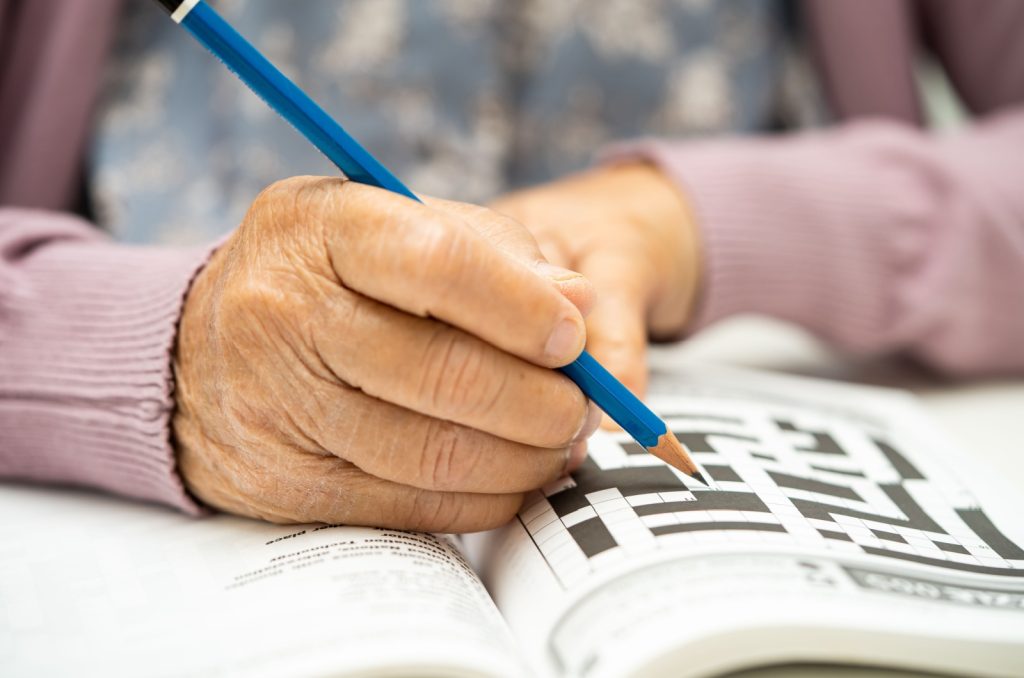
Engaging regularly with puzzles not only enriches your leisure time but also underscores the importance of mental workouts in our daily lives. So why not grab your pencil and a fresh crossword from the local newspaper, or download a puzzle app, and embark on a rewarding journey of cognitive exploration?
DISCOVER MORE: Click here to learn about the impact of memory cards on recall
Engaging the Mind: How Crossword Puzzles Stimulate Memory
Crossword puzzles have emerged as more than just a recreational activity; they are a powerful tool for enhancing short-term memory. This mental exercise challenges individuals to pull information from various pockets of their memory, fostering a cycle of recall and reinforcement that ultimately benefits cognitive function. As users grapple with each clue, they ignite several memory processes, inviting a deeper exploration of how these puzzles can help sharpen the mind.
The Mechanics of Memory Activation
To comprehend how crossword puzzles enhance short-term memory, we must first consider the mechanics involved in solving them. When users approach a crossword grid, they engage in a multifaceted cognitive experience that includes:
- Active recall: The act of trying to remember a word associated with a particular clue necessitates tapping into stored knowledge. This practice strengthens neural pathways linked to memory retention.
- Contextual learning: Clues often require solvers to think about multiple meanings or associations of a word. This contextual learning is crucial for encoding words and their definitions in short-term memory.
- Pattern recognition: As solvers fill in letters, they start recognizing patterns in words and phrases, enhancing their ability to quickly search for and retrieve information related to those patterns.
Research has shown that engaging with crossword puzzles activates areas of the brain responsible for cognitive processes like memory retrieval and spatial reasoning. This engagement not only helps in solidifying existing knowledge but also introduces the opportunity to learn new vocabulary, keeping the mind vibrant and active.
The Age Factor
While individuals of all ages can benefit from solving crossword puzzles, older adults may experience particularly significant gains in short-term memory enhancement. Studies indicate that regular engagement in mentally stimulating activities like crossword puzzles can help mitigate cognitive decline often associated with aging. The challenge posed by these puzzles pushes older adults to better retain and retrieve information, which is vital for maintaining strong cognitive health.
Additionally, a wide array of puzzle difficulty levels allows individuals to choose a challenge that suits their current abilities, promoting gradual improvement over time. Puzzles that begin as a light diversion can transform into a routine that fosters brain health and strengthens short-term memory, providing solvers with a sense of accomplishment and a deeper appreciation for wordplay.
Consistency is Key
For those keen on reaping the benefits of crossword puzzles, consistency is key. Regular engagement can serve as a mental workout—a way of keeping the brain’s memory systems consistently in practice. The more frequently individuals challenge themselves, the more adept they become at retrieving information, culminating in a more robust short-term memory.
Crossword puzzles not only provide a unique form of entertainment but also represent a proactive approach to cognitive health. By making crossword-solving a daily habit, individuals foster an environment where learning thrives and short-term memory is constantly nurtured. With this foundation, puzzle enthusiasts can look forward to a sharper mind and a richer vocabulary, all while having fun.
Crossword puzzles are not just a source of entertainment; they serve as a highly effective tool for sharpening cognitive abilities, particularly short-term memory. Engaging with these word games can significantly aid in the improvement of one’s memory retention skills. As players work through clues and fill in words, they are actively honing their ability to recall information. This process requires the active engagement of one’s memory systems, pushing users to tap into their existing knowledge base while also creating new neural connections.A study conducted by researchers at Stanford University found that individuals who regularly engaged in crossword puzzles displayed a measurable improvement in their verbal skills and memory recall abilities compared to those who did not. This enhancement stems from the necessity to remember word associations and spellings, which is critical in solving the puzzles effectively. Moreover, the brain activity prompted by these puzzles leads to increased neuroplasticity, which is the brain’s ability to reorganize itself by forming new neural connections. This adaptability is crucial, especially as people age, as it can help mitigate cognitive decline.Additionally, crossword puzzles can serve as a stress-relief method, allowing players to focus their thoughts and reduce anxiety, both of which are essential for maintaining a healthy brain. By creating a routine of puzzle-solving, individuals can significantly enhance the functions of their short-term memory and overall cognitive health. The social aspect of working on crosswords with others can further bolster this cognitive exercise, leading to shared knowledge and collaborative learning experiences. In summary, incorporating crossword puzzles into one’s daily routine can be a powerful strategy for enhancing short-term memory as well as overall brain function.
DISCOVER MORE: Click here to learn how memory games can help
Crossword Puzzles and Cognitive Versatility
One of the compelling aspects of crossword puzzles is their inherent ability to contribute to cognitive versatility. Engaging with puzzles requires more than just recalling words; it entails making connections and exercising critical thinking skills. As solvers navigate through clues, they engage in a richer cognitive process that simultaneously boosts short-term memory and promotes other essential cognitive abilities.
Enhancing Cognitive Flexibility
Solving crossword puzzles requires a dynamic form of thinking known as cognitive flexibility, which refers to the brain’s ability to adaptively shift between tasks or mental frameworks. A range of clues may revolve around a single word but draw on different areas of knowledge, compelling solvers to switch perspectives rapidly. Cognitive flexibility is crucial in navigating modern life, as it allows individuals to respond to new information and understand complex situations, marking it as an essential facet of memory enhancement.
Furthermore, engaging with diverse topics—ranging from pop culture and history to science and geography—encourages solvers to broaden their horizons. This mental versatility reinforces a flexible approach to problem-solving, often resulting in improved performance in real-world scenarios. Thus, crossword puzzles serve not only as a tool for immediate memory enhancement but also as a means to foster lifelong adaptability in thinking.
The Social Aspect of Solving Puzzles
Interestingly, the social dynamics surrounding crossword puzzle-solving can further amplify short-term memory enhancement. For many people, working on puzzles in groups or sharing them with friends creates an interactive atmosphere that promotes discussion and collaborative problem-solving. This social interaction serves as both a motivator and a means of cognitive reinforcement, as engaging with others often leads to shared knowledge and insights that may not surface in solitary tasks.
Group solving encourages participants to express their thought processes, facilitating a form of verbal recall that aids memory retention. Frequent interchange of ideas within groups can lead to a more profound understanding of the clues and terms involved, knowing that social interactions can significantly contribute to cognitive growth and cohesion. This communal engagement imbues the process with a dimension that enriches the memory-making journey, turning one-dimensional puzzle-solving into a multidimensional experience.
Scientific Backing: Studies and Findings
The science behind crossword puzzles as a tool for enhancing short-term memory is increasingly backed by empirical studies. Research published in cognitive psychology journals has illustrated a direct link between regular puzzle-solving and improvements in various memory tasks. A study conducted by neuropsychologists at a leading university found that participants who regularly engaged with crossword puzzles exhibited a marked improvement in their ability to memorize lists and recall information compared to those who did not partake in such activities.
Additionally, neuroimaging studies have shown that solving puzzles activates neural circuits in the brain associated with memory function, suggesting a biological underpinning for these cognitive benefits. As researchers delve deeper into understanding the effects of word games, the data continues to reinforce the positive impact crossword puzzles can have, particularly in mitigating memory deterioration in older populations.
The interplay of active engagement, cognitive flexibility, and social interaction paints crossword puzzles as a multifaceted approach to enhancing short-term memory. With compelling evidence emerging from both scientific research and anecdotal experiences, the role of these puzzles in cognitive development cannot be underestimated. Engaging with them serves not only as an enjoyable pastime but as a commitment to nurturing a sharper, more agile mind.
DISCOVER MORE: Click here to learn about memory and neuroplasticity
Conclusion: The Cognitive Benefits of Crossword Puzzles
In conclusion, crossword puzzles emerge as a powerful tool for enhancing short-term memory and stimulating cognitive growth. Through their intricate design and varied clues, these puzzles engage the mind in a dynamic way that fosters not only memory retention but also critical thinking and cognitive flexibility. The need to switch contexts and tap into different knowledge areas while solving a crossword translates into an essential cognitive exercise that goes beyond simple word recall.
The social aspect of solving puzzles together adds an enriching layer to the experience. Collaborative efforts not only create an engaging atmosphere but also leverage shared insights and discussions that promote deeper understanding and memory reinforcement. Through teamwork, solvers enhance their learning experience, demonstrating that engaging with crossword puzzles can be as beneficial socially as it is cognitively.
Supporting this notion, scientific studies continue to unveil the intricacies of how puzzle-solving activates specific neural pathways in the brain, solidifying the relationship between regular engagement with crossword puzzles and improved memory functions. As populations grow and the importance of maintaining cognitive health becomes paramount, incorporating puzzles into daily routines could serve as a valuable strategy in combating memory decline.
Ultimately, crossword puzzles offer more than just entertainment; they represent a commitment to nurturing a sharper mind equipped to navigate the complexities of modern life. As they combine fun with cognitive benefits, these puzzles not only challenge the intellect but also enrich our understanding of memory enhancement. Engaging with crossword puzzles is a form of mental exercise that is as enjoyable as it is beneficial, making it a worthwhile activity for individuals of all ages seeking to enhance their cognitive capabilities.
Related posts:
How Visual Puzzles Enhance Spatial Memory and Recall
How Jigsaw Puzzles Enhance Cognitive Flexibility and Memory
The Benefits of Memory Palace Techniques in Everyday Puzzle Solving
The Influence of Memory-Boosting Apps on Daily Cognitive Performance
The Influence of Logic Games on Memory Consolidation and Retrieval Skills
The Effect of Memory Cards on Long-Term Recall Abilities

Linda Carter is a writer and puzzle expert specializing in mind games, brain teasers, and cognitive challenges. With extensive experience helping individuals enhance their problem-solving skills and think critically, Linda shares her knowledge on our platform. Her goal is to empower readers with practical advice, engaging puzzles, and strategies to sharpen their minds and achieve success in the captivating world of mind games and puzzles.